Cosmediate: marketplace audit and redesign
The three roles of the product were designed as if they were entirely different products. I brought them into one design system.
Cosmediate is a Netherlands-based platform connecting patients with certified cosmetic clinics.
Client, Clinic and Admin had been built independently: a shared domain but no shared design system. The brief was broad: rebuild the whole thing so the experiences stay consistent while each role gets exactly what it needs.
3 roles full redesign design system from scratch Figma
Cut booking from 8 steps to 5. People book faster and stop getting lost on the way.
People do not book a clinic they do not trust. I moved certifications, practitioners and reviews up front, before the booking button.
Built three products on one logic and one style: for clients, clinics and admins. Solo, without a team.
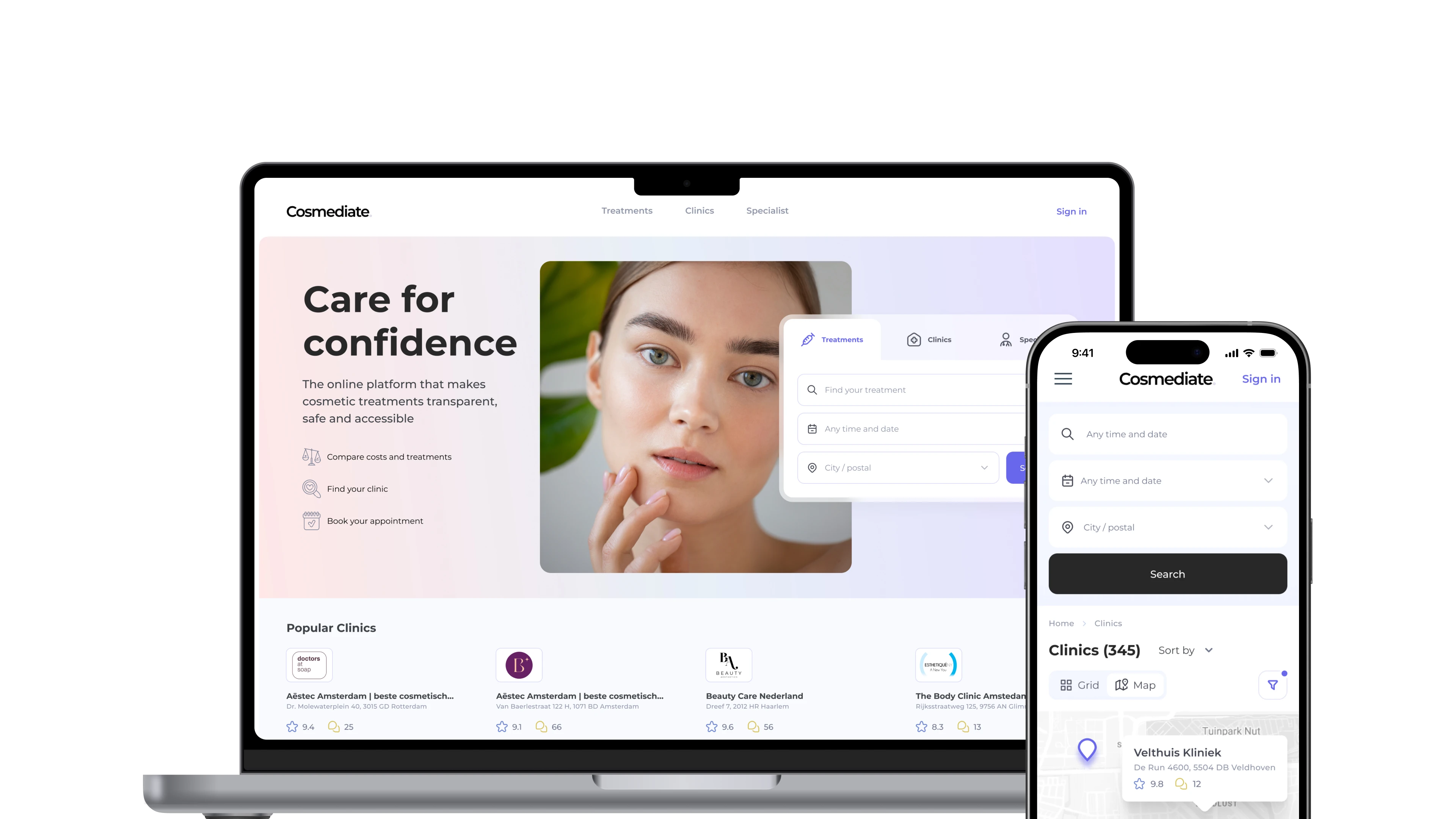
A design system for three roles
Components in the clinic dashboard have to stay consistent with the patient booking flow.
Before any screen work I mapped the information architecture per role, and then how they connect together.
How a clinic's availability surfaces in the client's booking flow, how admin actions affect what clients and clinics see. The design system was built for exactly this: semantic tokens instead of raw values and every component designed with all its states, because clinics live in edge cases, meaning fully booked slots, pending approvals and expired certifications.
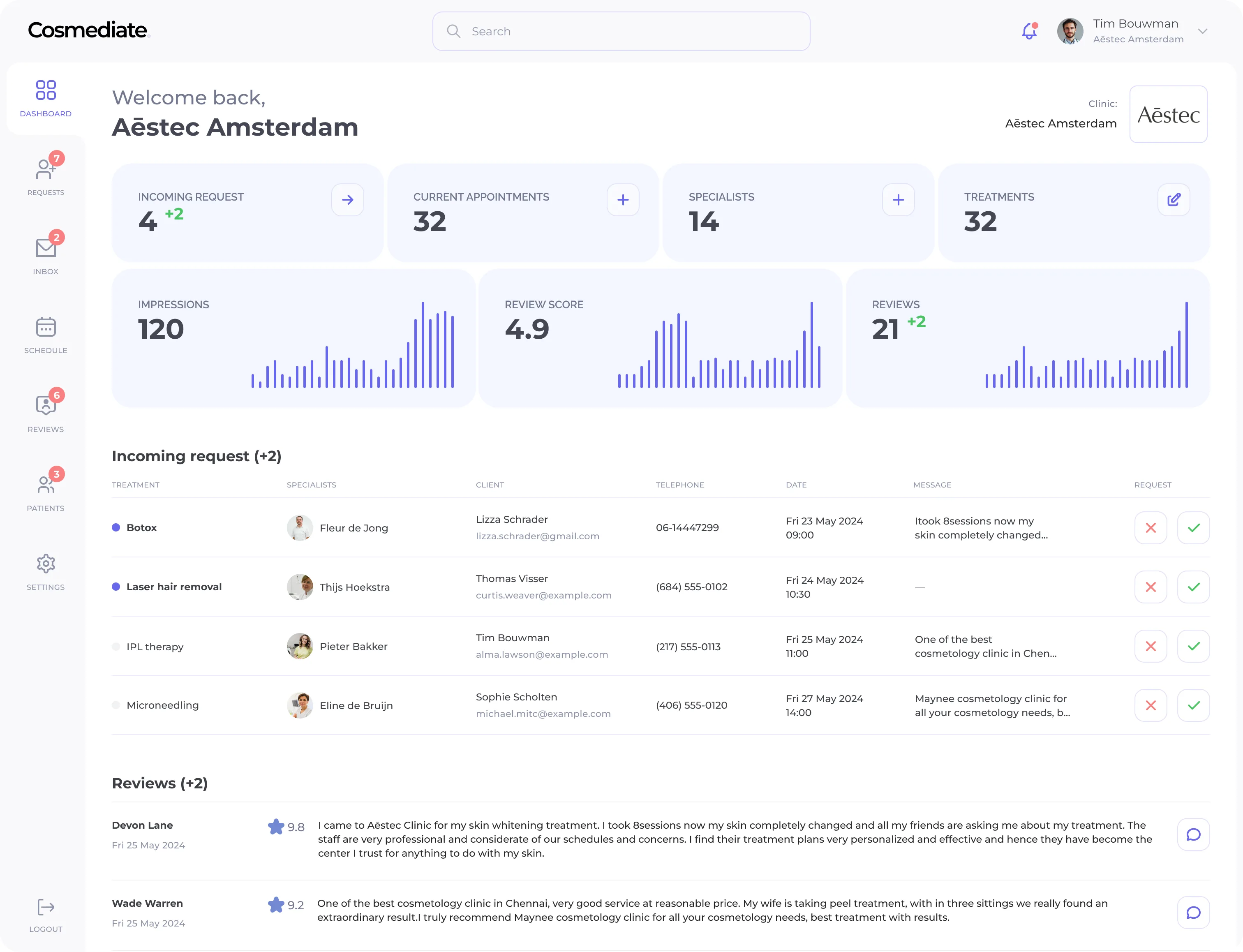
Booking flow
Booking a cosmetic clinic is not a restaurant reservation: what is missing is trust, not slots.
I designed the flow as a linear, step-by-step process where each step answers one question: clinic, treatment, slot, details, confirmation.
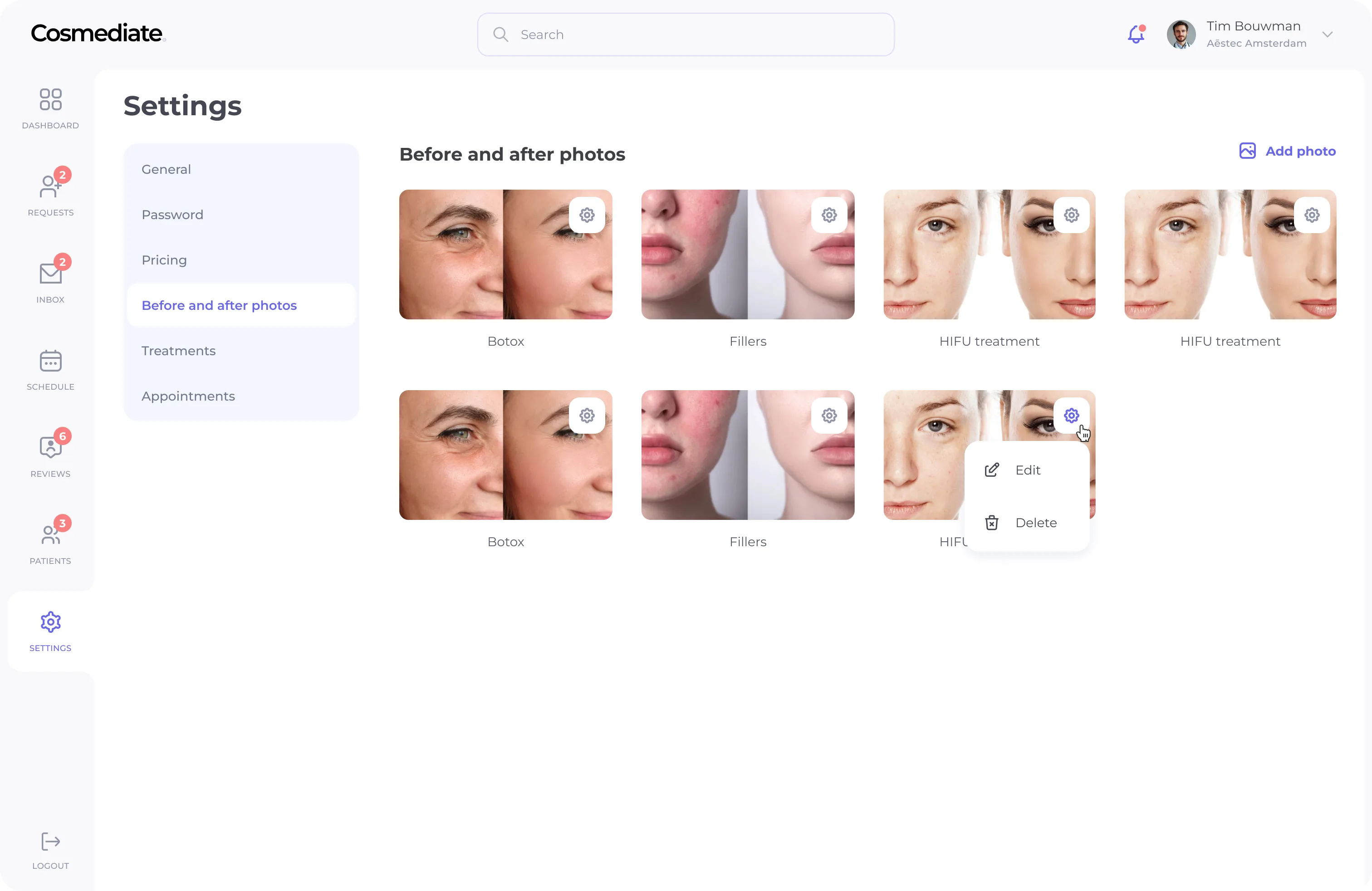
There is a consultation layer and certification requirements that generic booking interfaces do not address. The clinic profile does the trust-building before the user ever reaches booking: certifications, before and after photos, practitioner profiles and verified reviews sit above the booking button.
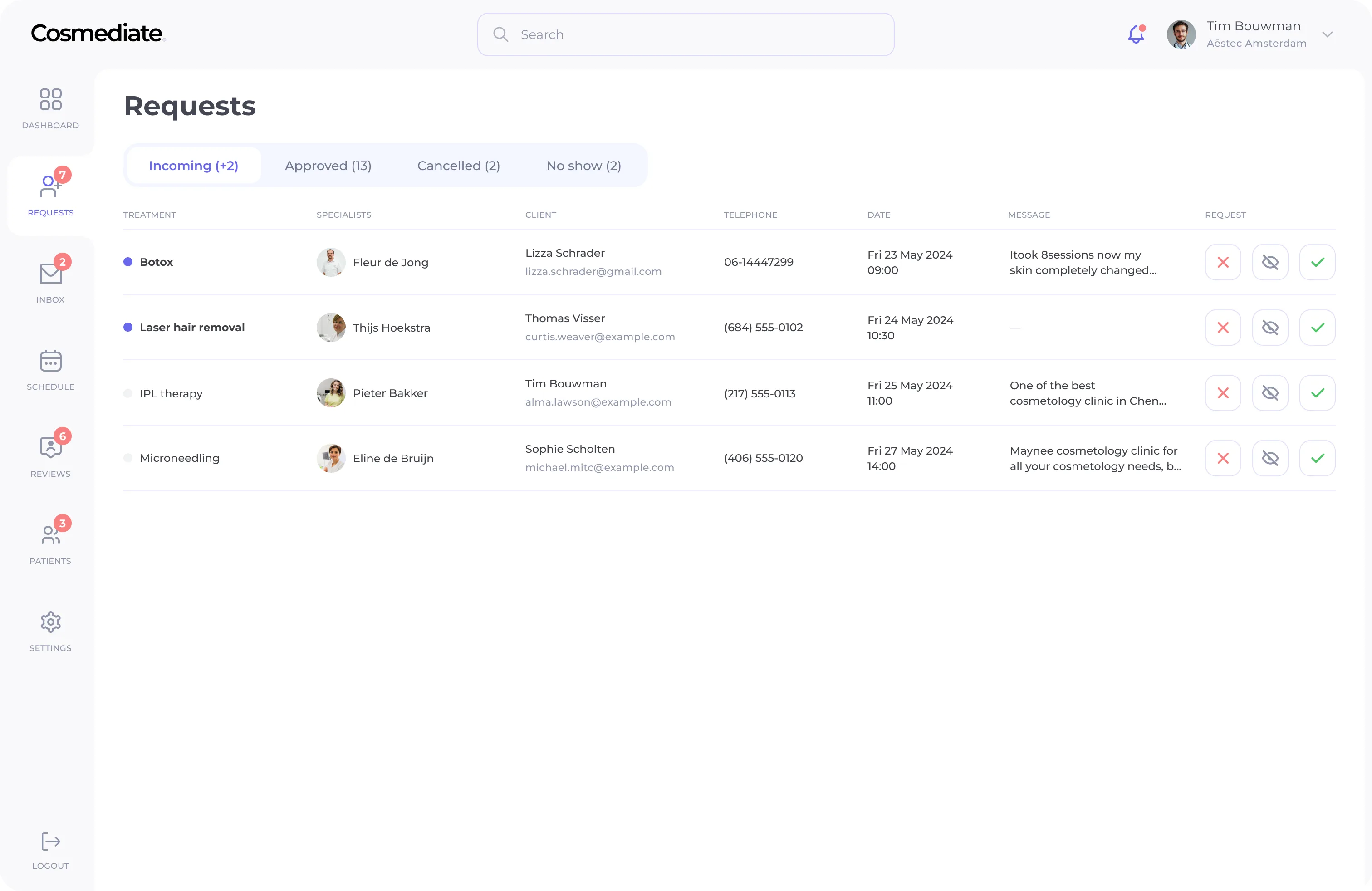
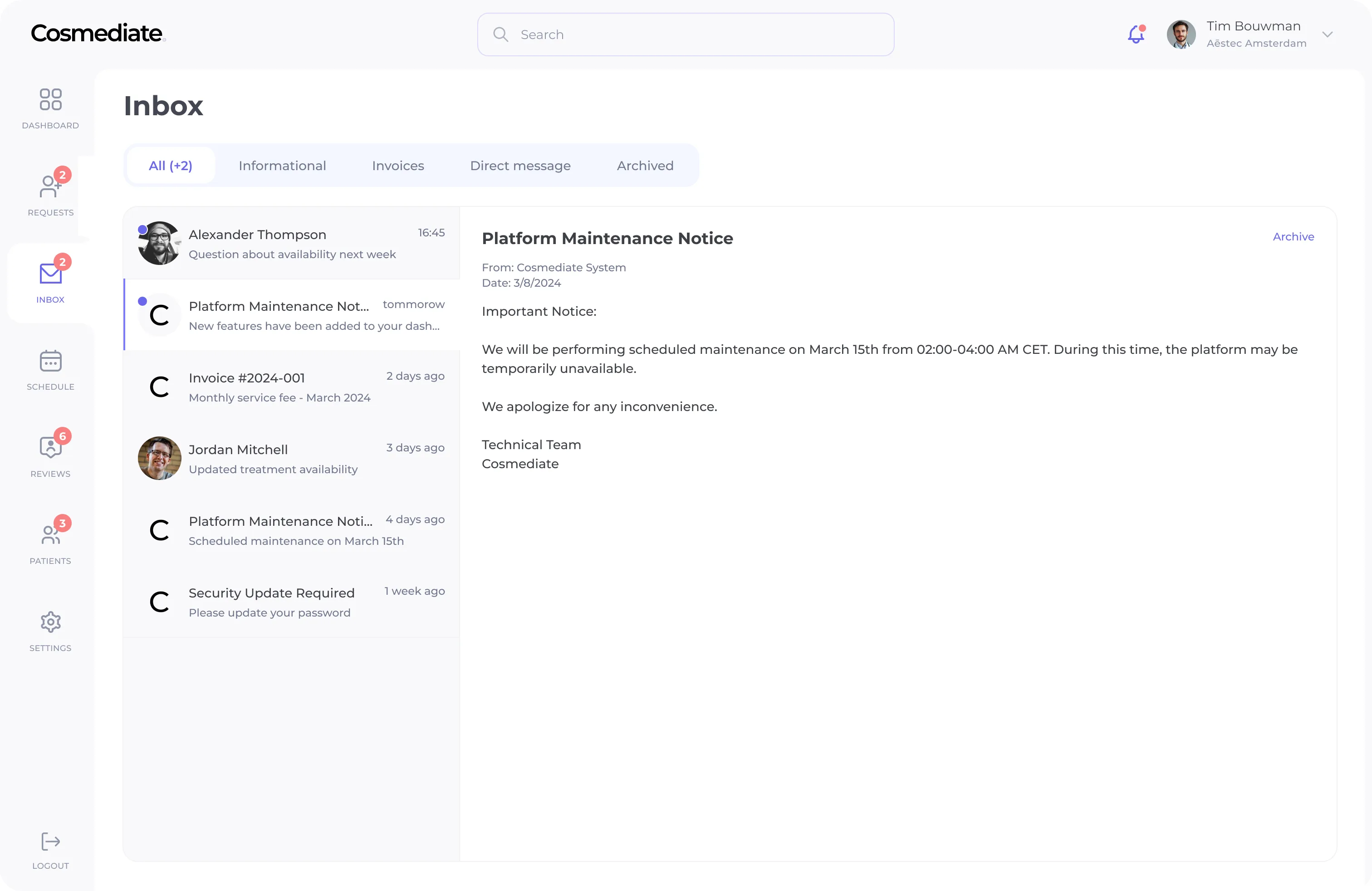
Clinic
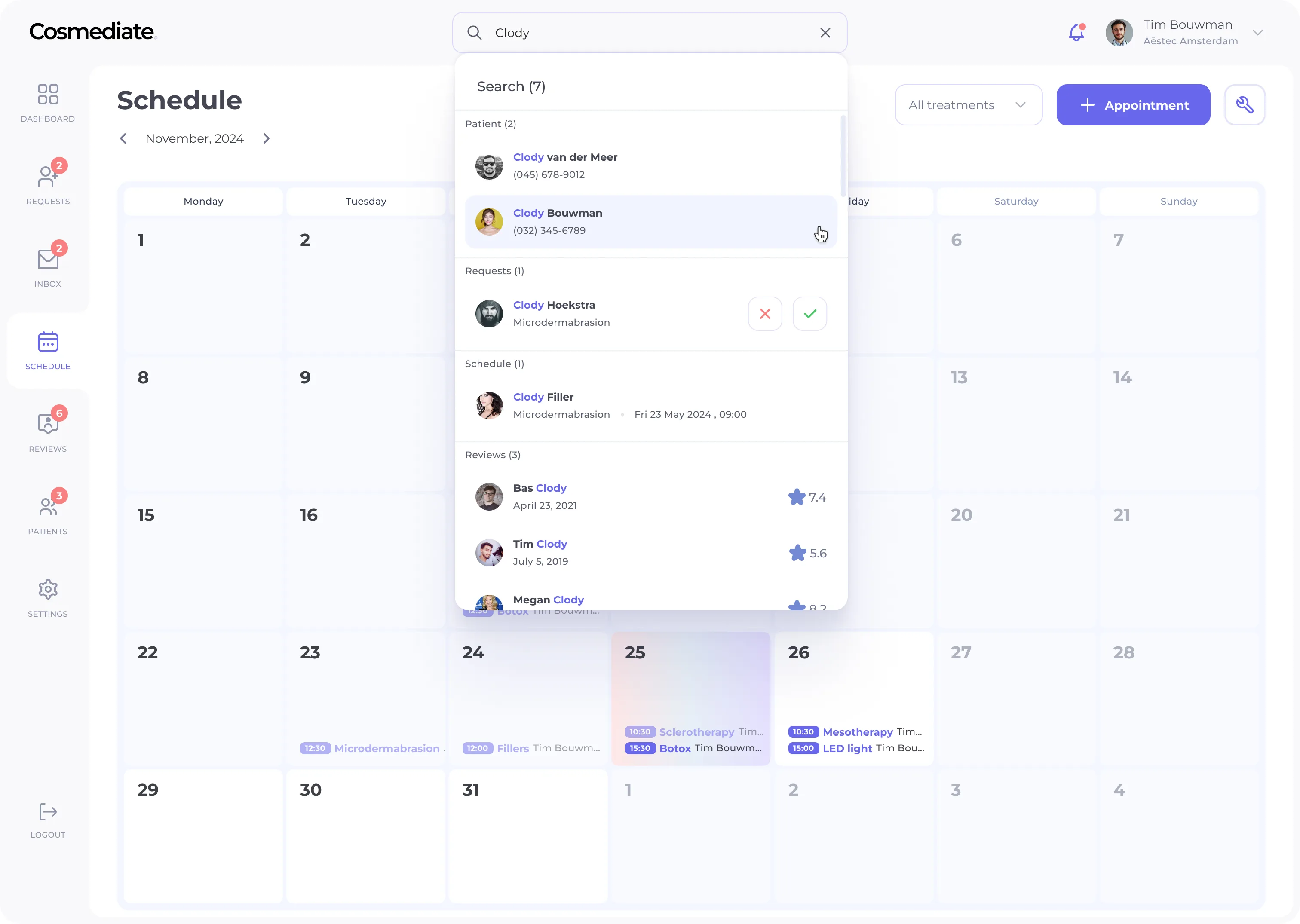
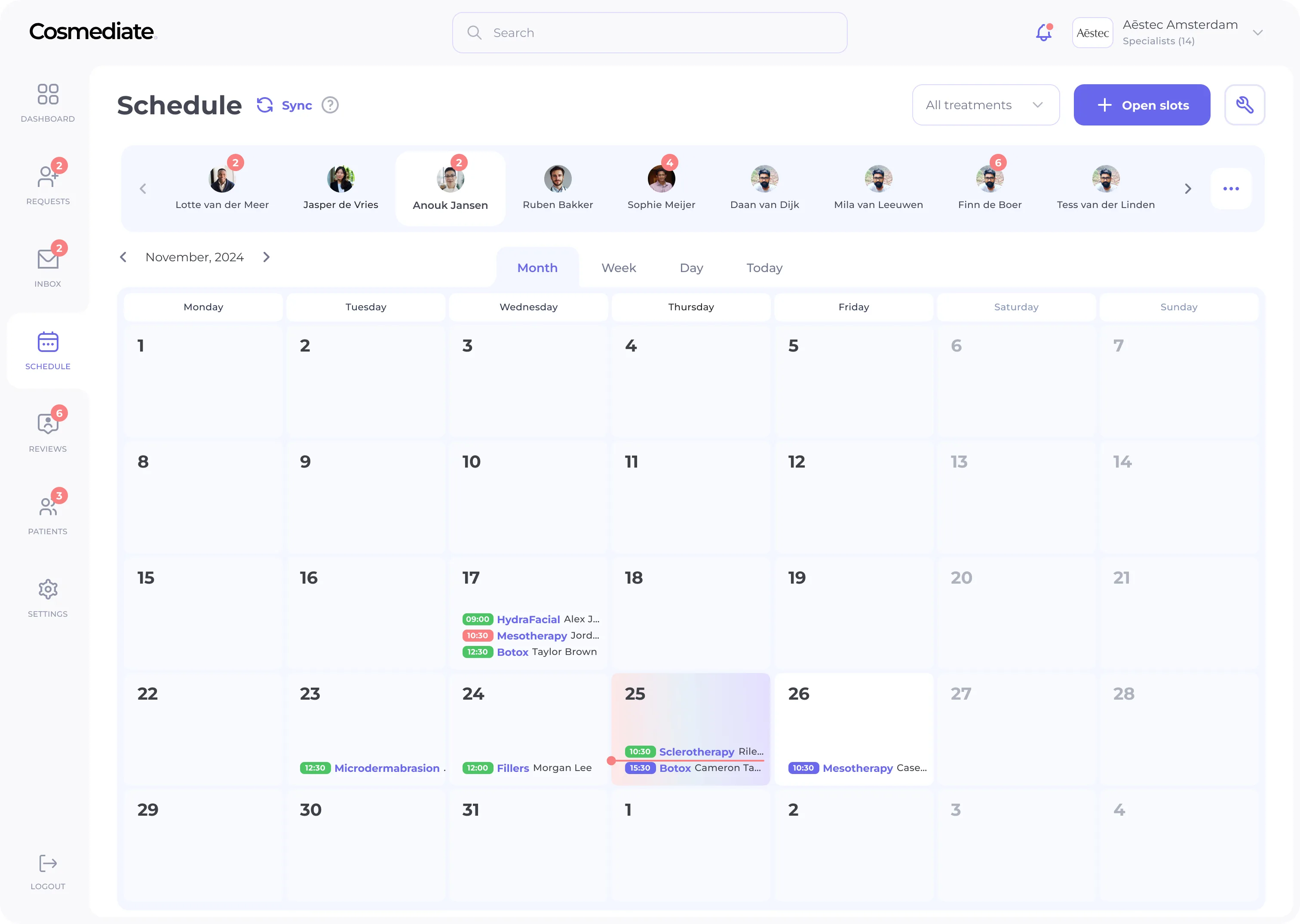
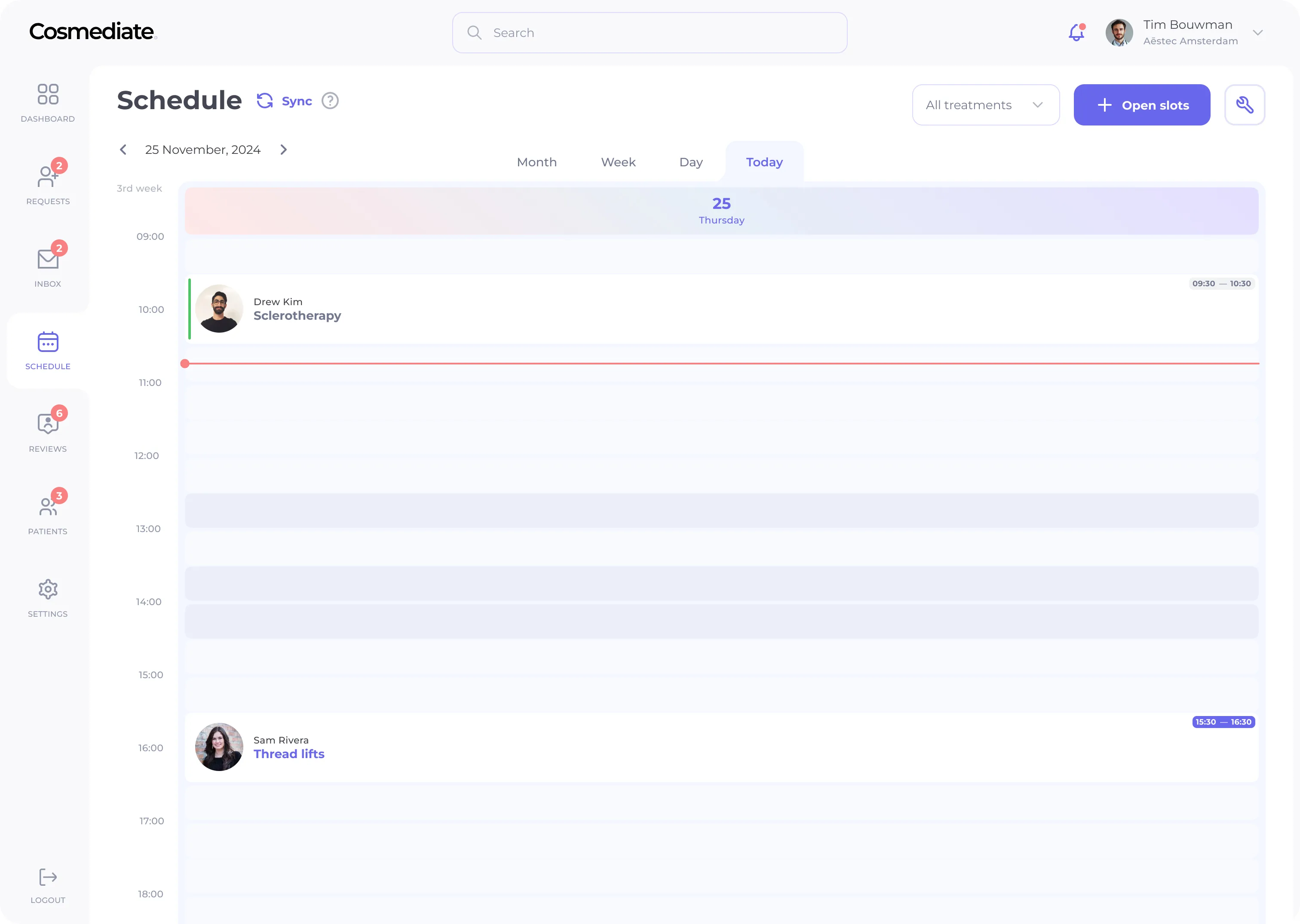
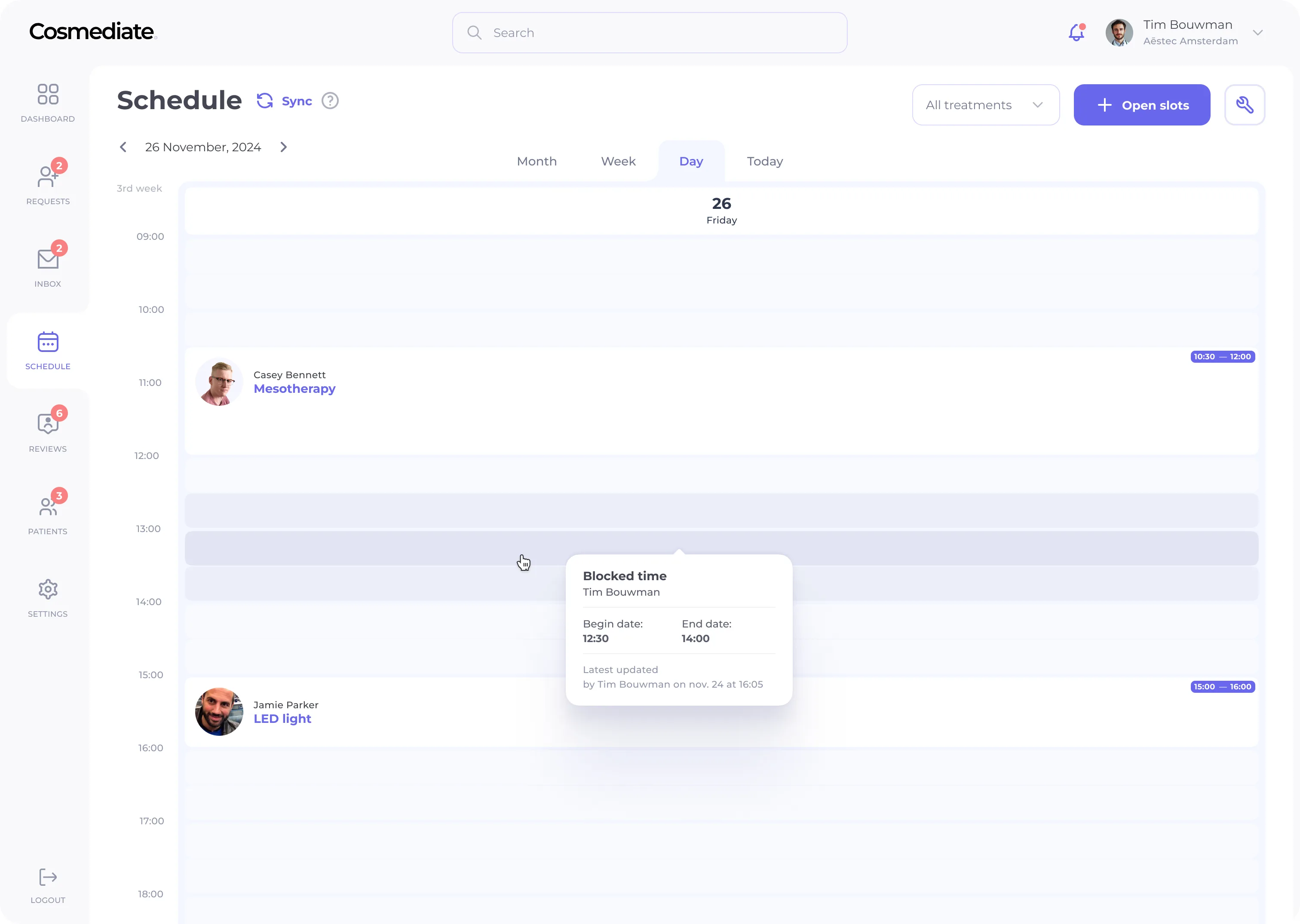
A clinic should not suffer from an overloaded interface, the business has to run without obstacles.
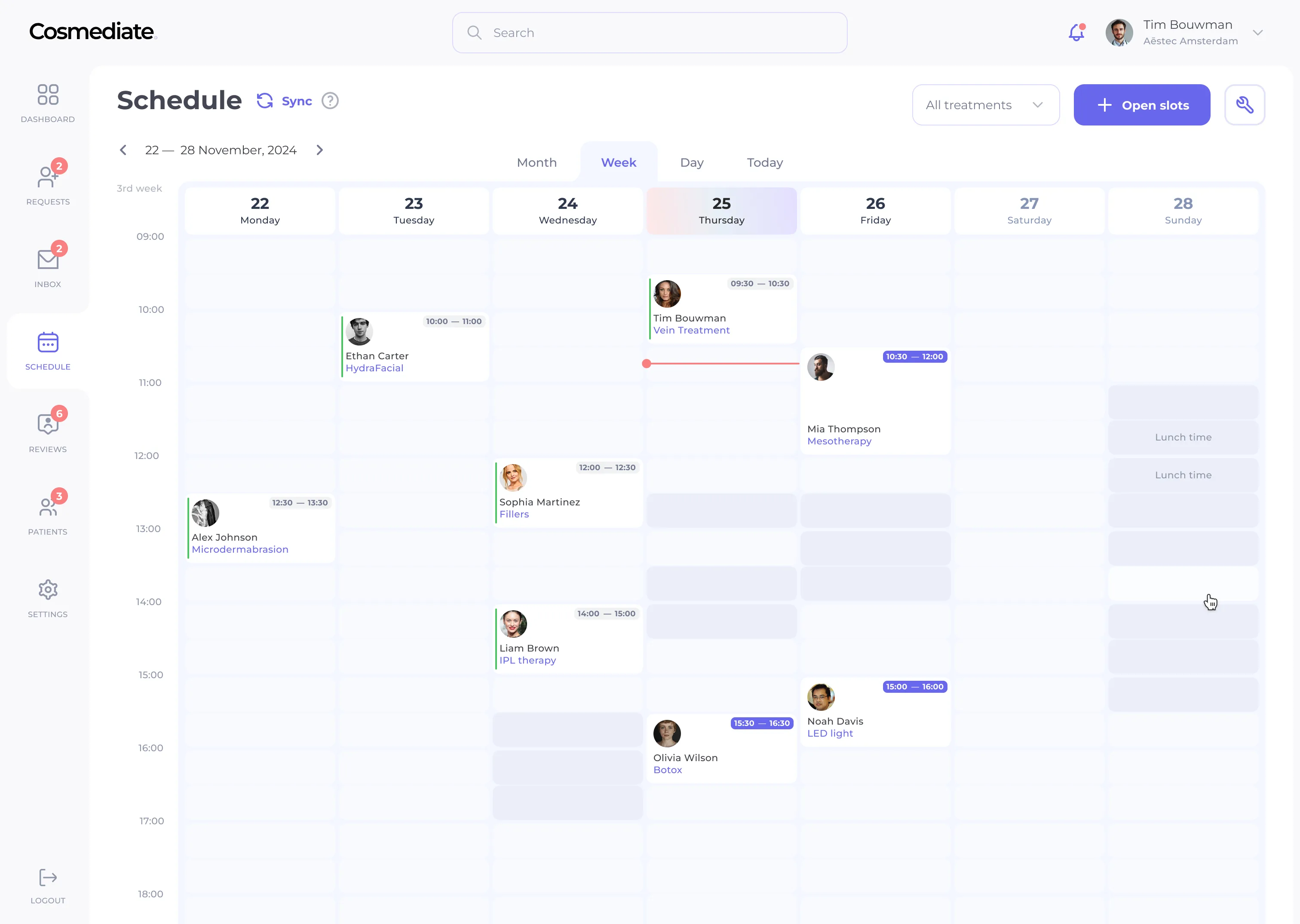
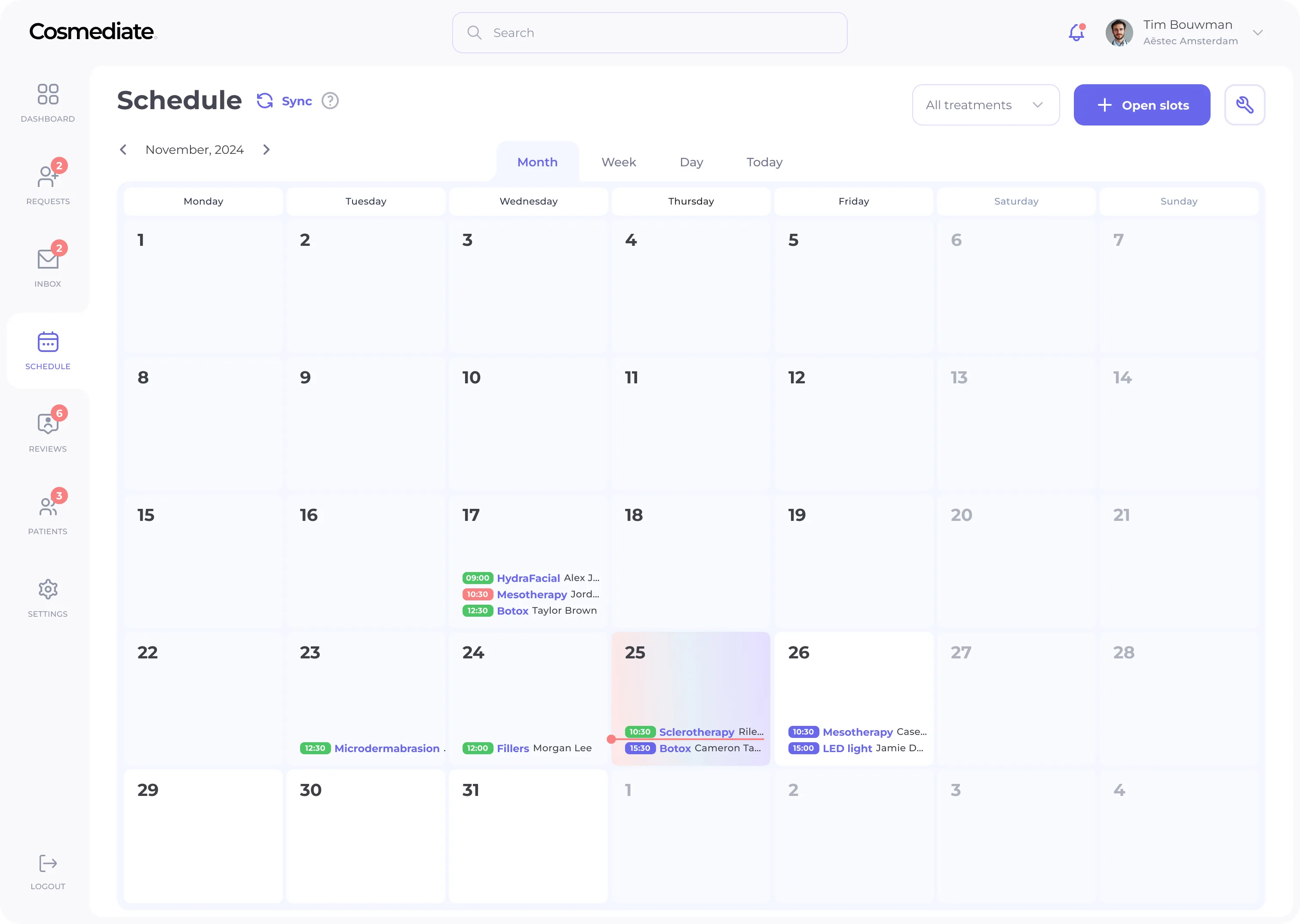
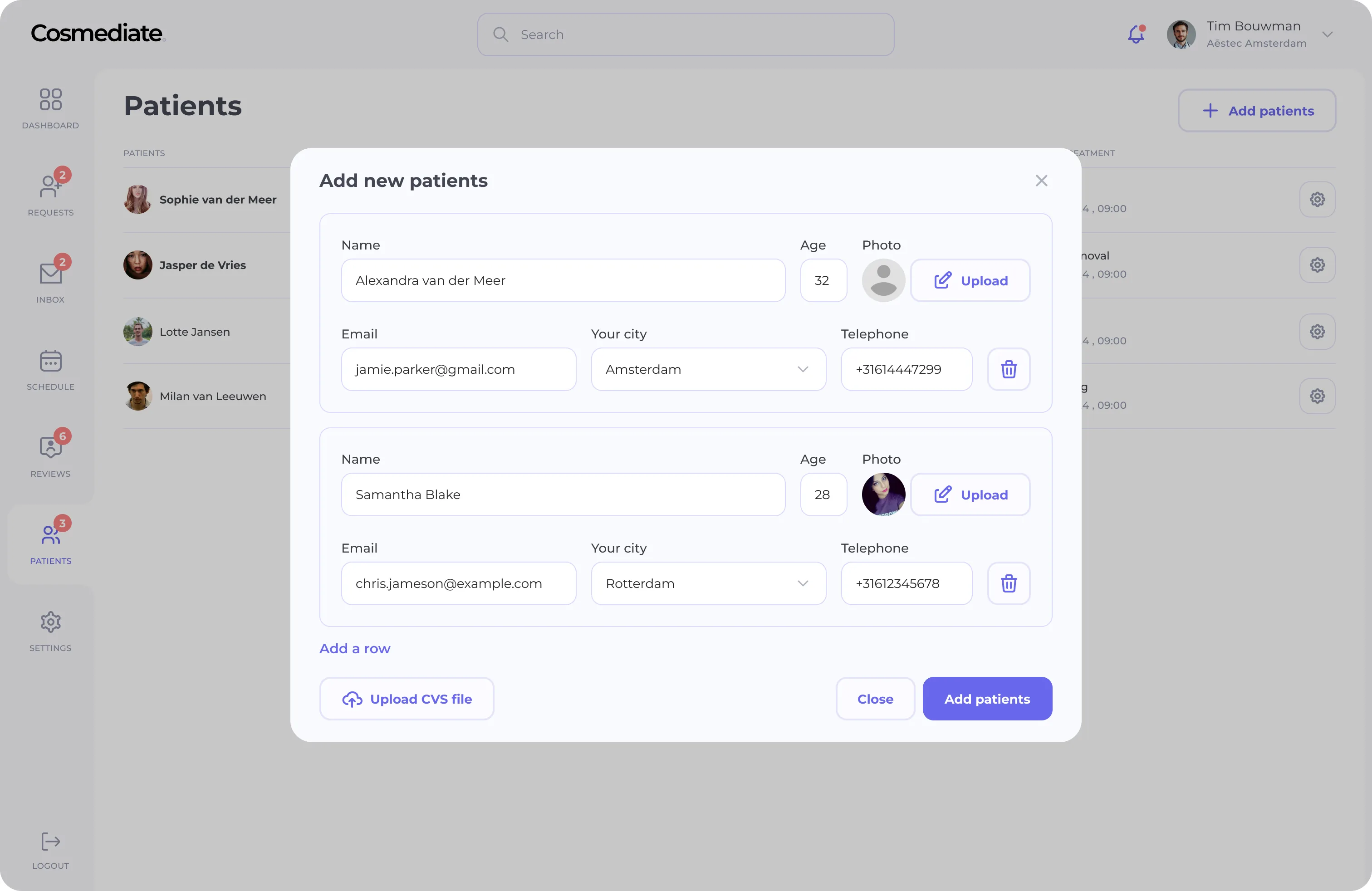
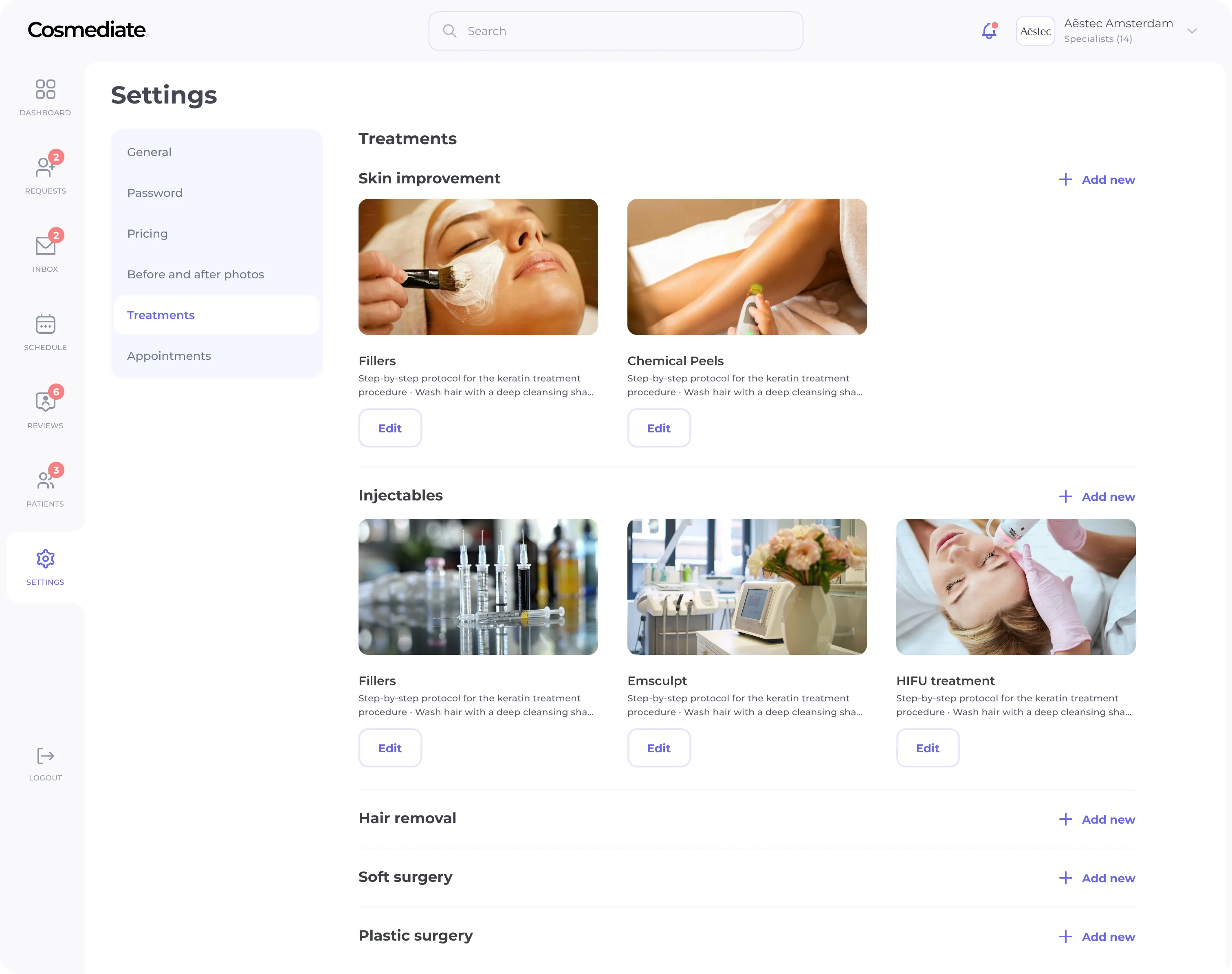
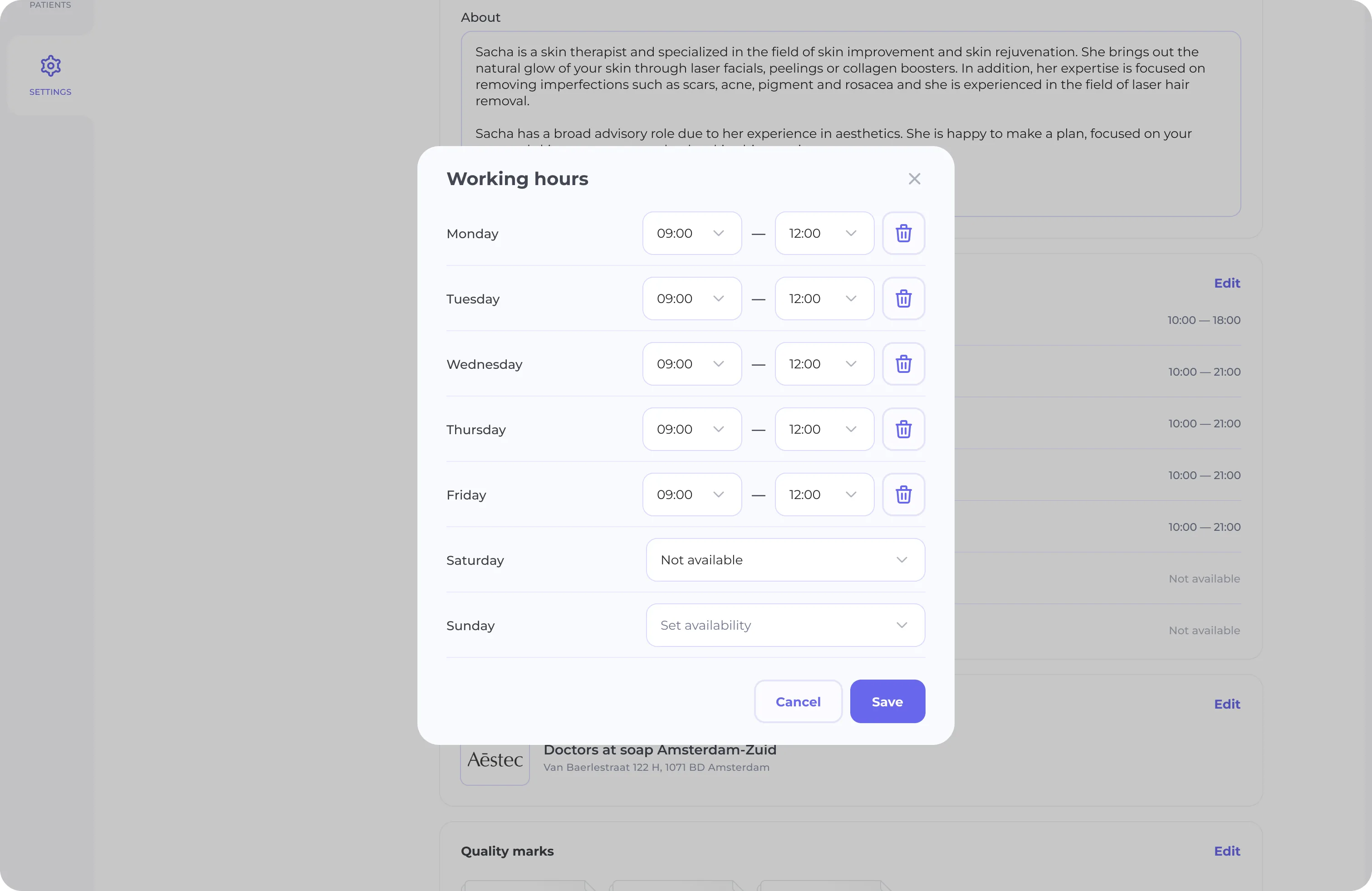
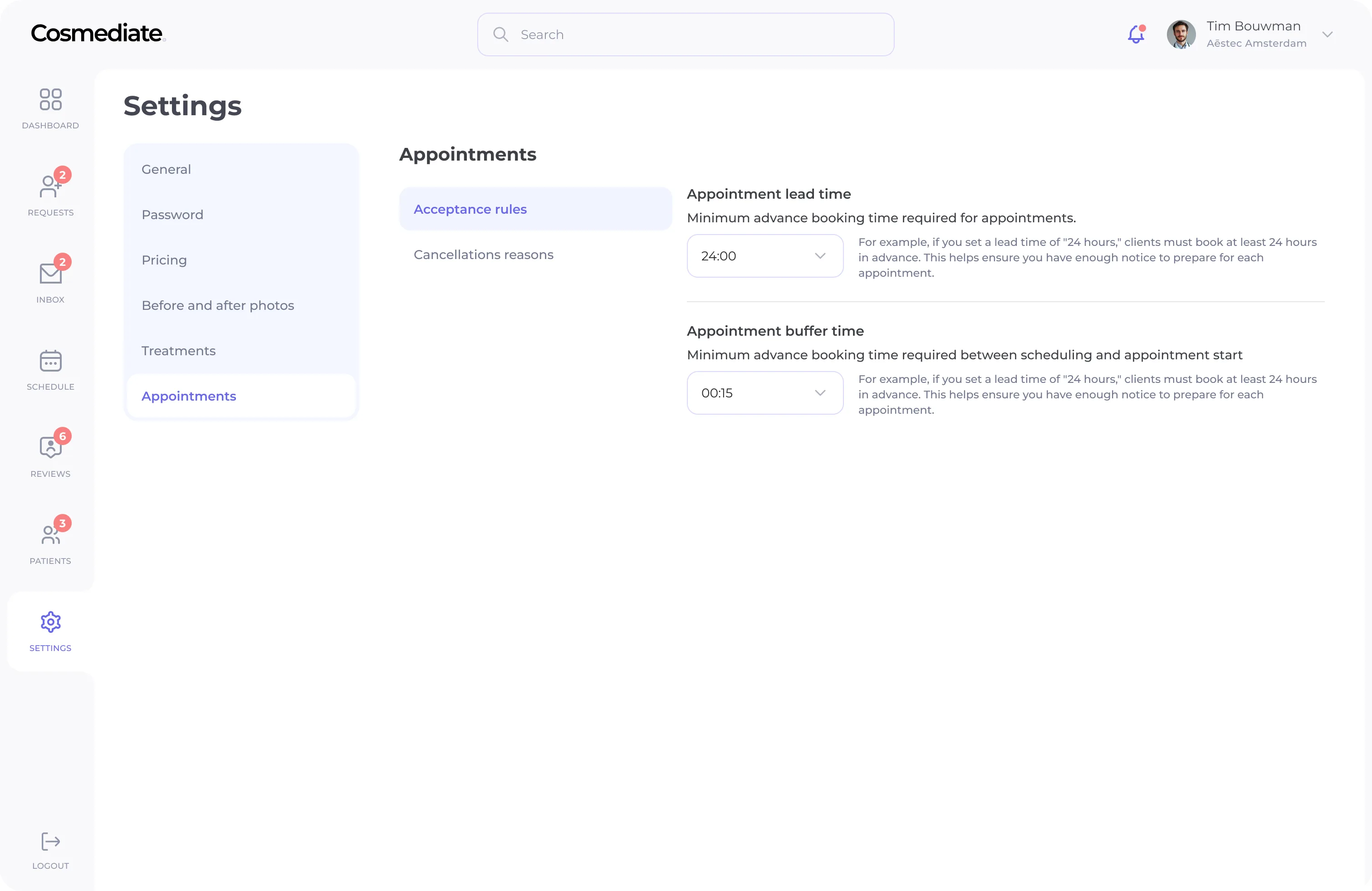
I structured the interface around three self-contained areas: Calendar, Profile, Settings.
A clinic managing multiple practitioners, treatment types and a high booking volume has to see the state of every booking at a glance. Booking management is built on the states pending, confirmed, completed and cancelled, each with a distinct visual treatment and a clear set of actions.
Admin
The admin side is an internal tool: it has to be convenient and clear to use.
I designed clinic approvals, certification verification, review moderation and user management each as a queue the admin works through top to bottom.
What the project required
Three-role products are hard because every decision echoes in the other roles.
Keeping that coherence from scratch, without a product team, meant holding the full system in mind at every step.
A change in how clinics manage availability changes what patients see in booking. The design system held those links together.